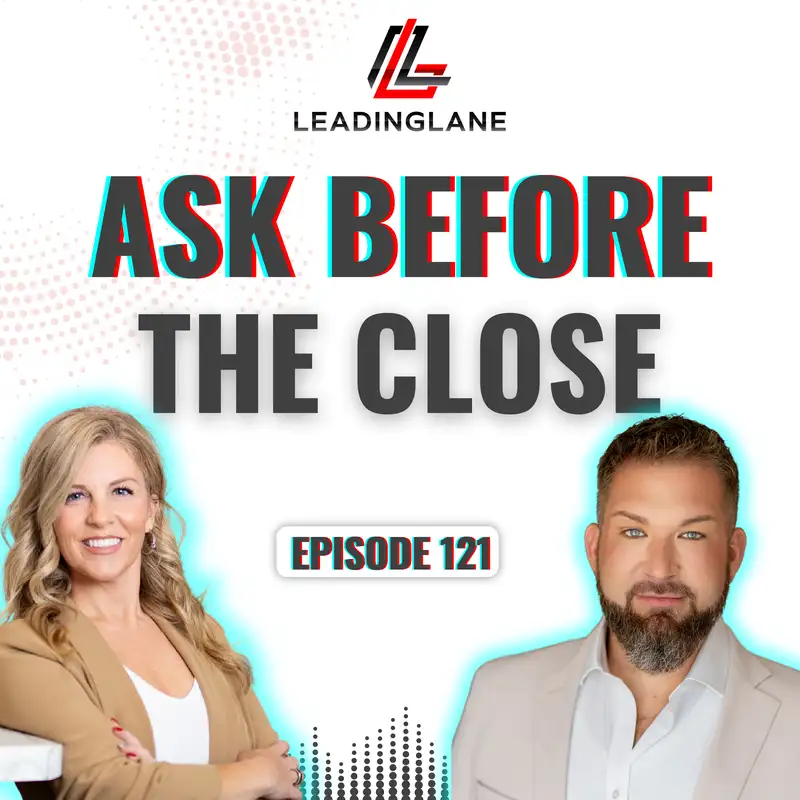
Stop Leaving Referrals on the Closing Table | LeadingLane Podcast | Ep 121
Download MP3Steven L Burch (00:17)
Welcome to the Leading Lane podcast. We kind of did an MIA and shame on us that we didn't have enough in the bank, like queued up to be able to push. But also I was going to give up vacation time to do the podcast. Sorry, I'm being selfish on it. But thank you for coming back and listening and tuning in. And Ashley, co-host, and also the one that is the travel buddy.
Our first question that we have is about referrals. Referrals were obviously in real estate were 100 % commission based, so our business, in my opinion, lives by referrals. But. I don't feel like agents actually ask. Why do you think people are afraid to ask for the referral?
Ashley Fredrick (00:49)
Okay.
I twofold is it's like an ick for them to ask and I don't think that ⁓ they know how or when to appropriately ask.
Steven L Burch (01:25)
So when and how from your playbook is the appropriate task.
Ashley Fredrick (01:33)
⁓ so I don't do a ton of asking for referrals. ⁓ I feel like it is more of a, a natural type of thing. So I think that if you deliver good enough service to people, it's just an automatic thing for them to refer. I will say that that has gotten more so like as time has gone on, but I think that when you're first starting out, I think the time to start is like to ask is.
Not like at the closing table. I know that some people feel that. And I think that that feels ick. But I think it's more like ⁓ when you're in the process or like it naturally leads to that conversation. I think that that's a great time. Like if, you know, they're super happy about something, it's easy to say, like, if you have any, you know, friends or family, I'd love to help them have the same experience. So I don't think it needs to be pushy or salesy. think it should be.
Steven L Burch (02:06)
Right.
Ashley Fredrick (02:33)
definitely come naturally. But I also think just having it like on other outlets. So right. I think some people have it at the bottom of their email, like the best compliment is a referral. think if it's in your newsletters, I think that there's just gentle reminders to people that doesn't need to be like in your face type of. I need, I need another client. I'm looking for that. So I will say like, I remember when I started in real estate, like there were some clients or agents
Steven L Burch (02:41)
Okay.
Thank
Ashley Fredrick (03:03)
I felt like you could feel like they were desperate because that's all they would do is like, right on Facebook, like I'm looking for this or, ⁓ you know, I've had oddly enough, like agents that have reached out and they've been like, ⁓ save the listings for us. It's not fair or something like that. And I'm always like, what is that supposed to mean? ⁓ like, right. Like I'm helping people that have contacted me and whatnot. So I think that there's just a point, ⁓
Steven L Burch (03:11)
Alright.
Hmm.
Ashley Fredrick (03:30)
knowing your people, taking care of them, and then they start to happen naturally, but then also just ⁓ knowing that it shouldn't be like, I'm not a door knocker. I'm not a cold sales type of person. I know that that works for a lot of people, ⁓ but to me, a warm lead is the best lead, not some type of cold calling. ⁓ And that's where I think you truly establish more of them and the repeats. think that's the other.
Steven L Burch (03:34)
you
Okay.
Ashley Fredrick (04:01)
Part, as far as referrals, is really tuning into your repeat
clients. You have to stay in touch with your people. And then that's when you get repeat. And then it's a lot easier when someone's been like, only worked with Ashley. I've worked with Ashley two or three times. That makes someone's confidence level, I think, that much stronger.
Steven L Burch (04:12)
Right?
Really think it's the ripple effect that you're trying to go after, right? Like the yes, the biggest splashes in the middle with the person that you're working with now. But what is that effect? Go out further and who else can that actually touch? And I completely agree like.
if you're gonna wait to be able to ask for referral to the closing table, ⁓ I feel like that right there shows that it's like, okay, I don't have another deal on the pipeline. I have commission breadth, who do you know? And I think that if you were developing that relationship throughout the entire transaction, as they start dropping these little hints and you need to listen to them, right? Because you can't tell me that.
people that are out there that are purchasing, they're not talking to their friends and families about the process already. So you know they're already talking about the process, but so how do you shift that to where instead of them just talking about the process, they talk about you? And I think it's those touch points, those extra mile things that you do to be able to help your clients and be able to create and cultivate an experience versus just create a transaction.
There's two totally different things that are happening there.
Ashley Fredrick (05:37)
Yeah, I think it's that whole experience thing, right? Like there are some people that like say that they met their realtor at a showing and they never saw them again, right? Like to me, that's not an experience that they should have been involved in your inspection and your final walkthrough and you know, insurance recommendations, those types of things. You know, the other way I think about referrals and this kind of comes from the concept of BNI is training your people to think outside of the box for you. So at
Me and I, I mean, a little different. You do ask for a referral every week or like the perfect referral for me this week is, but really it trains other people to listen to what they can be figuring out for you. So for example, I think it was a couple of years ago, I said something about ⁓ if anyone happens to be going to a garage sale or a moving sale, you know,
And you're there and you ask them some questions and you happen to ask, like, are you working with a realtor? And they say, no, that'd be a great opportunity for you to say like, ⁓ know Ashley. so sure enough, like my friend Jody went to this garage sale and she texted me and she's like, Hey, I'm at this moving sale. These people don't have a realtor. They're calling you later today. It's like, I didn't have to do that work. Like, right. Like they were comfortable enough that someone came to their garage sale and gave them my name. So I think it's really.
Steven L Burch (06:38)
Okay.
Okay.
Ashley Fredrick (06:58)
It's not just like people that are like, I'm looking to sell. Like there's different ways, right? Or like if a curb starts filling up, you know, you can ask friends in the neighborhood.
Like, Oh, do you know what's happening with that one? Then? And again, it's not me directly cold calling. It's me getting that information via someone else.
Steven L Burch (07:15)
So really what I heard you say is like you're training your cheerleaders, you're training your biggest advocates, the people that support you, the people that love you, right? Your sphere of influence, we hear it all the time. SOI, sphere of influence, your top 25, top 50, whatever you want to call it, don't care. But those people that you can really be honest and vulnerable with.
you are showing them how they can be able to now be your essentially your bird dog, right? Be your cheerleader, be your bird dog, go out there and find somebody for you. And if you continuously love on your top people, your sphere people there, like they're going to continue to remember you even more because now they're looking at it from a different perspective, like what Ashley is saying, right? Like, so now they know that, ooh, you know, we have these pie events or this special event that we're doing with Ashley and I'm-
Not that you're getting rewarded, but also like you're there and you're bringing them in there. They like that. They're creating the relationship. They want to do it. Not that they have to do it. So I think it's shifting the mindset of like referrals is not like, who else do you know looking to buy real estate? Instead, it is making sure that you don't even have to ask for the referral. Your people know that they want to be the cheerleader for you and they're going to do it no matter what.
And also, I guess I should say that too, there are some people I don't want to be my cheerleader. I don't want to work with again, and I'm a-okay with that. We can put a pin in it and never come back to it. But, you know, we want the good people.
Ashley Fredrick (08:50)
I had a slide of my recent presentation about how can you give me referrals? And so this is kind of what I go over with people. So one is being an active listener. for your client, for your cheerleaders to be active listeners. that's change in career, family size, income, new to the area, leaving the area, downsizing, divorce, renting, all those types of things. Like all of us know somebody that's doing that.
⁓ the other one, and I don't know if this is prevalent in your area, but it's fairly prevalent in our area is that they, bought their home with a realtor that's now retired or one that's gone out of the business. ⁓ right. Cause we know that there's been a huge influx of realtors leaving the business as well. So it is funny. Like when I go to do some of these listing previews, I'll always pull up the, you know, prior MLS sheet and a lot of them bought from someone I've never heard of. So my guess is that.
Steven L Burch (09:26)
Mm.
Ashley Fredrick (09:45)
⁓ They like sold them the house, they never heard from them again. You know, so I think that either that or yeah, there's been retired realtors. So I think that if there's a way to find connections to those people that is ⁓ ideal. Obviously, ⁓ you know, for sale by owners, same thing, ⁓ warmly, I think will always go over better than a cold call. I tell people to like social media like just by simply sharing or liking or commenting on a post, you know,
There might be someone in your network that didn't know that they were looking. ⁓ And then I do get asked this question a lot. So I think people will ask like, what if they're not happy with their current realtor? And I always say like, that's a tough one. We are not allowed to reach out to someone that currently has their home listed or is currently under a buyer agency contract. But if those people reach out to us, you know, we can obviously let them know like when the time comes, we're happy to help you.
Steven L Burch (10:21)
Okay. Okay.
Ashley Fredrick (10:43)
It does happen. ⁓ obviously people have contracts to abide by, but all of those different areas, it's not just who's
looking to buy or sell, right? There's so many different caveats. And if you can really train your people to like, I don't know my carpet cleaning guy, right? He knows like when he's going to clean a carpet and he'll normally ask them, is there a reason that they're cleaning their carpet? And I've gotten like two or three from him that they were looking, they were cleaning carpets cause they were getting ready to sell soon and they didn't have a realtor.
Steven L Burch (10:52)
Right.
⁓ huh.
Yeah,
I mean it again it goes relationship It's all about that like if you don't have a good relationship with your carpet cleaner, right? Like they're not gonna go out there and and help you but if you have a great relationship you refer to them and They're gonna start referring back over to you as well. Um, I wrote down two topics here points So in our area, obviously where military base is very near to us, right? So I think it's
Very, to me it's super simple. But we have a lot of people that PCS here, meaning that they're changing duty stations and they're coming to Fort Riley. And it's not just one person that is PCSing that comes down on orders. Their unit brigade, right? Like there's people that are going to be coming here. And so they know that person who is PCSing here knows other people. So it's asking, who else do you know?
or they're over and PCSing as well. Like I would love to be able to help them and make sure that you can, you know, connect me or whatever, however you ever want to say it. And I think that right there, once you start getting into those types of groups, because it's very tight knit, like people want to work with people that they know and trust. And if one person in their unit trust, you know, you as the realtor, that can really get things flowing for you. The other thing that I see all the time
is you you do go to the closing table, which is fantastic. And then you take a nice photo. Great. And you have these wonderful text, you know, that you're saying congrats to my buyers, blah, blah, and all the things that you did for your buyer. But they never actually tag their buyer in anything. Right? Like tag the buyers, make sure or your sellers, whomever you're working with.
Go a step further, tag the vendors that helped you with that transaction, the title company, the lender, the inspector, whomever else helped you with a tag. Because what you are now doing is when you tag them, you're now tapping into their referral network, right? Their friend group, the people that are following them. And so if you really, if you were able to tag four or five people into this one post, how many different people are you in front of now that are seen and scrolling and looking at you?
So if you like working with that buyer or seller, birds of a feather flock together typically, right? So you want to work with those people and you wanna get into their friend group. so utilize the social media. It's not that difficult to tag them. You should be friends with them on Facebook anyway, in my opinion. But yeah, so what else you got?
Ashley Fredrick (13:54)
think
that too is like every transaction is different, right? So there's some people that you might not be in there, might be a simple post, but I prefer to try to tell stories if I can, just because it makes people understand that like it wasn't just just sold. Like we had to jump through five hook, like five pickups, which probably reminds me, I need to do a shout out for last week's closing that was literally like the biggest roller coaster ride of my life. But we made it happen, right? So I think. ⁓
Thanks for that reminder. I'm not going to just do it just sold. Like I want people to understand that there is so much more to a real estate transaction that people don't see just besides that just sold post. The other thing I wrote down is just, I think this goes back to what I'll always say is, but just a matter of showing up. that's a, to me, that's an easy way to get referrals because when you're the one that people see, you're the one that people like can actually have a conversation with on a regular basis.
Steven L Burch (14:52)
Thanks.
Ashley Fredrick (14:53)
know that you're the expert. When and if that time comes, they may not have used you, but they might be like, I see Ashley everywhere or I talk to Ashley all the time. And then again, that's just another easy handoff for them.
Steven L Burch (15:06)
So there's a ton of ideas here and different things to be able to look at it from different perspectives and tactics to be able to. You know, implement into your business. But if you're not doing anything at all, right, at least ask, even if you need to get comfortable like get uncomfortable so you can get comfortable and ask even if it gives you the itch. So if you don't have anything in your pipeline, you.
don't have things lined up for you. That's when you start asking, you're literally leaving money on the table, transactions on the table, because you don't want to ask. So my question, Ashley, why do you think people don't like the ask? I know I started with that, but I'm going to do it again. Why do you think people don't like the ask?
Ashley Fredrick (16:01)
⁓ you know, I don't, I don't know. think it's maybe the, maybe they're not confident enough in themselves. ⁓ or I think they maybe think people were interpreted for something else. I guess I feel like maybe if you're just not being genuine about it, that's why it doesn't feel good. or if you are genuine about it, I feel like it is more of a just casual type of thing that comes up. You know,
I do think the other thing we talk about a lot is the roller coaster of. I'm busy. I'm not busy. I'm busy. I'm not busy. So I think that if you don't have a system in place for asking for referrals, um, that is a great thing to implement. know, there's two books, uh, like raving referrals is one book that's great about asking for referrals. Um, I'll have to think of the other one. think it's like 50 something about 50. I'm blanking on it right now. Um, but it is.
Steven L Burch (16:37)
I
Yeah.
Not 50 shades of
gray. ⁓
Ashley Fredrick (16:59)
Nah, not quite. You
know, but it's even like, here's one thing I think, which we didn't talk about is tracking where your referrals came from. So like, right in an Excel spreadsheet, whatever it is that makes sense to you, like I like to write down who who that referral came from. So whether that's a friend of mine, my hairstylist, my makeup lady, whatever it might be, but then also
Steven L Burch (17:11)
Mmm.
Ashley Fredrick (17:28)
What are you doing to thank them? So like, I'll send them a card, you know, as a thank you, most people are shocked, like I didn't, you didn't have to send me a card, like a little coffee card or whatnot, but I mean, they're going to remember that. And the next time that someone asks them who they would suggest, they're going to remember, you know, that, but I mean, it's really interesting at the end of the year, if you can look back and see like where your referrals came from, I think that that is important of then how you choose to do things differently the next year or spend more money like.
Steven L Burch (17:39)
Mm-hmm.
Ashley Fredrick (17:57)
client of mine, you know, we realize a ton of them were coming from repeat or past clients. So my suggestion was to spend more money on being in touch with your past clients if that's where the majority of your business is coming from.
Steven L Burch (18:13)
Numbers matter, metrics matter, right? Because if you don't know where you're spending your money at and you don't know where you're getting your return of investment at, you're just kind of just throwing money everywhere and seeing what sticks. And I think it's super interesting when you'll, like when I got in real estate, you've heard me say it before, like I didn't have a CRM.
I didn't have anything to be able to track those different things. And so now when you have those systems, like it really drills everything down and we have a system to where you have it as well actually, but it even breaks it down to where like, okay, cool. If you have this amount of transactions from this category, if you want to make X amount of dollars, you now need to do this number of phone calls, this number of touch points.
because this is the conversion rate to get you there. Like the drill down of down to how many note cards a day do you have to write consistently day over day and then you're gonna get this result. But if you don't know those numbers, how are you supposed to be able to drill it down that far? So it's wild. Drill numbers, numbers for everything, KPIs.
Ashley Fredrick (19:25)
It shouldn't be a guessing game, right? It should be, this is what you do for a living and you know where your sources are coming from and you can plan accordingly.
Steven L Burch (19:27)
No.
Absolutely. The word that I wrote down is rejection. People don't like rejection.
Ashley Fredrick (19:45)
and
fear rejection.
Steven L Burch (19:47)
fear of rejection, right? That confidence, all of this. We're entrepreneurs, we get rejected every single day. may just not, you might be nose blind to really all the rejection that happens every day, but it's not rejection ⁓ against you, in my opinion, and it goes back to being genuine. I think the rejection really is your approach and how you are actually performing. So I think people don't want to be able to look in the mirror sometimes.
and understand that they might be the problem.
Don't be the problem.
Ashley Fredrick (20:23)
I think
once you get past the first couple and then like once you do see your clients that are really happy that do refer you to other people, I think that that's really easy then to be like, ⁓ this does work.
Steven L Burch (20:36)
It's super simple. Just have to ask, get used to it. No, super. Kiss it, keep it simple, stupid. Cool, I love it. I think that referrals are something that can go in multiple different areas like we have established. I challenge everybody that is out there, regardless if you're in real estate or whatever you're doing, you have cheerleaders, you have sphere of influence, reach out to at least five people today and just start the conversation.
Ashley Fredrick (20:38)
Don't have to over-complicate it.
Right.
Steven L Burch (21:06)
see where that actually gets you and then let us know your results.
Ashley Fredrick (21:10)
you might be surprised.
Steven L Burch (21:12)
Thanks for tuning in. We'll see you next time.