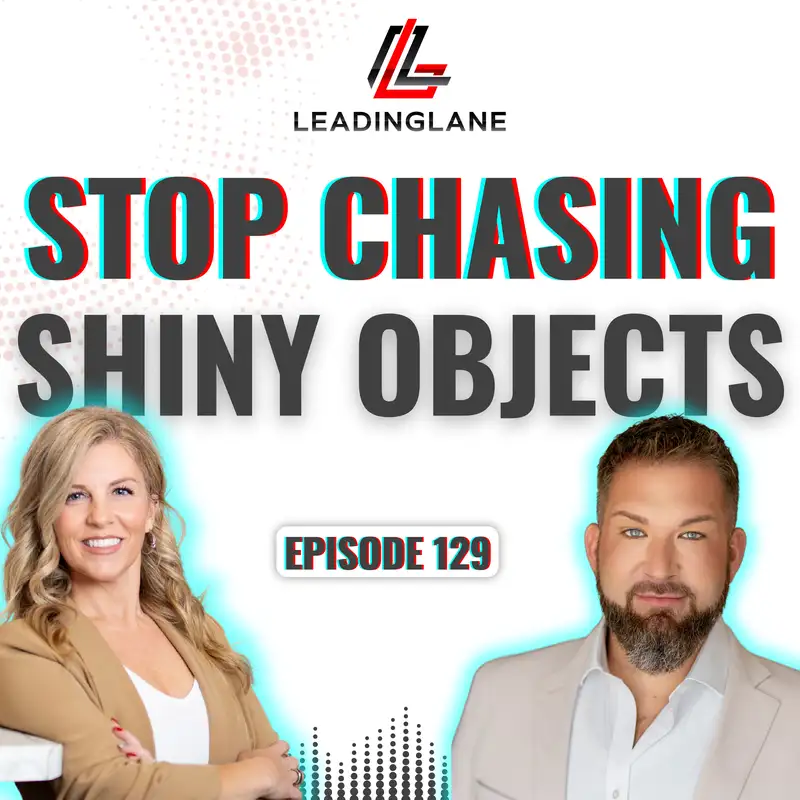
Stop Chasing Shiny Objects: The Priority That Actually Grows Your Business | LeadingLane Podcast | Ep 129
Download MP3Ashley Fredrick (00:17)
Welcome everyone to the Leading Lane podcast. today we're gonna talk about priorities and what that means as far as I think even personal life, but also in real estate. And I know we've talked before about like the next shiny object or the next big thing, but I think that real estate is still a back to the basics type of industry, even though there's a
Steven L Burch (00:34)
Mm.
Ashley Fredrick (00:43)
ton of AI, all these types of things. I feel at least in like my small town, like it still comes back to people and making those types of things a priority in and what you're doing. so Steven, if someone is struggling in their real estate, what what's normally the first thing you have them think about?
Steven L Burch (01:06)
Well, I'll start with what I think they normally come to me with is like, I need to go buy leads, I need to go buy something. And they think that there's some sort of magic button, shiny thing that's out there that's going to be able to take it all away. typically I say, That's not that ain't it, right? the first thing I have them do is what are what are your actions that you're doing now? Like w how are your how are the new people coming into you?
So are there what are your lead sources? how are you meeting people? What is going on? How many conversations are you having a day? And typically what those individuals do is, well, I don't know. You know, like I talk to people, I see them at Walmart or I see them wherever, and like, okay, that's not real conversations that we're talking about here. they kind of just go with the flow. They're more so
all over the place and don't have a plan and don't have an a true pinpoint of what they are actually doing. They're just kind of like life is happening to them versus them taking control and actually doing life. And I think that it the first step has to be that they have to be able to see that. because they don't have any numbers, they don't have any metrics, they don't know
return of investment, they don't know where they got their last deals from. It's that self-reflection they they have to sit down first of understanding where are you truly at now, today, in your business, what's happening. That's the first step. Like then a lot of times people once you make them do that, they'll either actually do it or you'll never
They'll completely revert and run the other way and never bring you the actual results because they don't want to talk about it because it's a hard self-reflection to be able to do that audit on on what you're to be doing. So I don't know. I I that's the first thing I would do. what would you do if, you know, you were coaching me and this were happening, what would you tell me to do?
Ashley Fredrick (03:18)
Yeah, I mean I think it's a true time audit of what you're doing and where you're at. So, you know, one thing that you've mentioned before is screen time. So like I I hate when people will say, like, well, I didn't have time to make calls or I didn't have time to reach out to someone, but like like, did you? 'Cause probably had time to scroll Facebook, TikTok, Instagram. You know, like if that's three hours in one day, I mean, like, do you know how many people you could have reached out to and
Three hours, an hour.
Steven L Burch (03:48)
But actually that's marketing.
That's marketing, right? That's sc scrolling, doom scrolling is what that is. That's not marketing.
Ashley Fredrick (03:59)
but I also feel like people get like stuck in their bubble of like they're same little people. And so like if you're not actually going and like meeting new people or doing new things or even like talking to past clients, I think a lot of people just think like that leads are gonna like fall out of the sky and that you sit at your desk and I don't know, they just like magically pop up.
Or sure, you pay for these lead sources or these lead to close, pay at closing type of things. And like, is there a rhyme and a reason for those? Sure. As an agent that might be struggling, I don't think that's where your best money is spent. A lot of those tend to be not active or like not truly their spam. They might take six months. Like, if you were to actually like have your CRM up to date and like
dive into your CRM and spend time on people that you know. And I've even said too, like, when's the last time you asked someone, like, do you know someone that's looking to buy or sell? And then everyone's always like, I would never ask that. And I was like, why? Like it's not like you're asking for a sale. Like you're just it's a friendly reminder of like, like do you have friend that's, you know, moving to the air and like nine times out of ten, someone would be like, you know, I think so and so mentioned they might move this summer. And like it's an easy window into that. But I mean
I think it comes back to what you've mentioned before, is like the fear of rejection or the fear of failure. So it's almost like people would I feel like would rather remain stuck than uncomfortable.
Steven L Burch (05:36)
Well, isn't that that you are fight, flight or freeze? like they're gonna be and just chillin'. They're not gonna want to go anywhere. 'Cause I I I bet you that when, you know, if this person is coming to the table and saying that they're having you know, trying toft market right now or I don't have any transactions or whatever they're saying, like you said C R Like, cool, pull up your C Rm. And I think that the
Ashley Fredrick (05:40)
I fight. Mm-hmm.
Steven L Burch (06:05)
Really, a lot of times agents like well, like, yeah, I have a CRM, but do you utilize it? Like, I don't care what system it is. I don't care like anything about the bells and whistles. Like, are you utilizing some sort of customer relationship management system to make sure that you are staying in contact? Relationship management. Like that is what a CRM is. It's a buzzword.
But what are you doing to create a relationship that you need to manage? And you know, actually I had somebody come in and basically this whole conversation. So pull up your CRM. well, I don't use it the best way, you know, like I I this and you know, there the app doesn't really work. Or you know, there's times I just text them from my cell phone and like
Yeah, that's all great. Those all can be logged into your CRM. Those are excuses. So that excuse management really is what we're trying to make sure that we're putting into check. And when it drills down to it, I think the mass majority of the time, people are not making this a priority. They are not making people a priority. And again, if you want to increase your business, the priority needs to be on the customer relationship that you manage.
Very simple. There's a whole system you can buy for it. That's what you should be should be spending your money on is a system that can be able to help you manage all of it. Because if you're gonna go out there and you're thinking that all these leads are gonna be flying over to you and you invest that money into it and you don't have a true system to manage your relationships, those leads let's money out the window.
Like what you're looking for is instant gratification. If it was that easy, then I mean all you're doing is being an order taker, waiting for people to come to me come to you. You're not being proactive and you're not making your career a priority. It's really the simple way to be able to put it. Hard truth.
Ashley Fredrick (08:06)
I think that I feel like right now there's been a a big push on like AI classes and a big push on like Instagram classes and TikTok classes and buy this guide and follow that guide. And I think I told you a couple weeks ago, like I was trying to do this Instagram post. It took me like an hour, because that is not my cup of tea. And I was like, this is absolute insanity. Like I can obviously spend that hour.
Steven L Burch (08:30)
Mm-hmm.
Ashley Fredrick (08:36)
elsewhere, but I mean like is that the best use of time? Like can you outsource some of those things? And sure you might not have the ability to do that, but I think we've talked about even like fiber or whatever, and it's like five dollars an hour or something like but you just spent seven hundred dollars on a course. I mean that's how many hours worth of someone doing it, you know, for you. But I think that again, like
Steven L Burch (08:52)
Mm-hmm.
Ashley Fredrick (09:00)
I still look at the majority of my clients and it's either like someone referred me, I've known them, like gotten to know them, like very rarely do I feel like it's a cold lead. Like just doesn't work that way. So I think that people forget that like that's where the like the sweet spot is, is with your people. But if you're if you're not being seen, if you're not having those conversations, you know, like if you're not giving them
Steven L Burch (09:14)
Yeah.
Ashley Fredrick (09:29)
market updates, those types of things, like then you kind of start to fall off as the real estate expert because they're never hearing from you. Or like I had a client that met someone really cool and I was like, did you put in your CRM? Mm-hmm. Well, no. And I was like, well, why not? I mean, like, then they'd get your monthly newsletter and then you might have only met just met them, but what if that person like knows seven people down the road? Like you just have to think about again, like where could one person lead you to? But you have to nurture everyone.
Steven L Burch (09:59)
And and and I think that like we always overcomplicate everything as humans. And we think it has to be this big elaborate plan. We talk about it all the time. but really being able to make sure what you're doing is truly providing value. And what what is it that
you provide value. And the typical agent says, no, I can take them from the transaction, right? From signing a buyer agency or listing and taking it to the closing table. Yeah, that's once they decide to hire you. What happens beforehand? How do you show value beforehand? How do they know that you are worth the investment? Like they are hiring you. So what is the value that you are providing them to ensure that they know that you're the best choice? And typically agents just look at me like, what are you
What are talking about? Okay, let's talk about value. What is something of value? Your newsletters, right? You do two different different newsletters. You do one that is a a personal side of things, coaching, if you will, and then you do one that's a super local on events. So you do and not each list gets both of them, right? On your list, Ashley. You have two separate lists, if you will, target audience that you're going for the different demographics.
That you are providing value to. So there very well could be somebody that gets both of them. And hey, that's double whamey there, because they're getting double of the value. But what are other things of value that agents can showcase to the public without going and spending some sort of astronomical amount of dollars?
Ashley Fredrick (11:42)
I I found like even as simple as like a market update. Like I do one typically like on the first of the month. And it'll 'cause you know, right, that is like typically one of the number one questions you get from people. It's like, how's the market? Right. So I just do like, it's July first and here's where we currently sit. And I do, you know, like there's X amount of houses between a hundred and two hundred, two hundred, three hundred, three hundred, four hundred. And it's like a minute and thirty seconds. But I mean, do you know how many people send me messages after that? Like
Is there really like no houses for sale under 200? Or, you know, I've been thinking about selling, but I'm in that 400 range, like that is you said is slow or whatnot. So I think that something just as simple as like what is the current market? Like we all have access to that data, but sharing that data is what people are looking for, right? Like it brings value or you know, value of updates to do on your house, right? So same thing, like people will be like, I'm gonna.
I'm gonna be replaced with all the flooring and I'll be like, No. Not the best use of value, like right. So I think like value is just explaining those things to people. Like what are good ways to improve your ROI over time? Like, right, and I always tell people like, Yeah, like you had to replace the AC unit. Like unfortunately, like that's not necessarily like value, it's a maintenance type thing. So try and explain to people when they're looking at doing things like
I to me like I find it value of like the ways to take care of your home too. Like so many times people would just yeah, people just take care of their homes they could get more value.
Steven L Burch (13:12)
So educating.
Like educating people, making sure that they know what to f you know the upgrades are or what they shouldn't do, what's the fab, what's not, right? and looping this back to like going to all these different courses. Like they think that like they have to go do something and where the the disconnect is happening, like yes, you would go and you invest that seven hundred and fifty dollars to that Instagram course pool, you go for it. But how are you putting that into use to provide value?
And that implementation process is truly where the deck disconnect is, is because they think that just because they did the course, then everything is going to be great. People should be coming to you. Just because you did the course and got your license doesn't mean that people are going to come to you automatically. You have to be able to showcase the those items in multiple different channels, multiple different avenues. and being consistent.
I think that's the the whole other part of this is that it's not just post it and pray that one time and all of a sudden your business is gonna flourish. You are gonna have put yourself out there. You're like it takes no money to take your cell phone, start recording yourself and putting value, putting tips, things that you learn for the day, whatever it is that you desire to be able to do, provide value.
the agent that I I was talking to not too long ago, I asked her, How many people do you know in the area? And you know, even that, like not even being able to give me a number. Like I have a who do you know list and there's 250 questions of who cut your hair, who's your dentist, who's your doctor, who's this, who's that, right? To help be able to generate that. Out of all of those people, who own homes?
It takes you no money, in my opinion, to run a C CMA. So printing, cool, mailing it or whatever. But there's this wonderful thing called email or drop it into their social media inbox or both. but who doesn't want to know like what their home is worth? That's an easy in right there. But just because you did that one time doesn't mean that they're gonna come over to you. So again, that's where that
Ashley Fredrick (15:34)
Right.
Steven L Burch (15:35)
CRM comes into play because once you figure out who owns homes and who you know that should be going to your CRM, then you should be having an action plan of newsletters or whatever you want to be able to do, these market updates and so on and so forth, so that you can continuously stay in touch with these individuals, creating a relationship, providing value, making them a priority. Yeah.
Ashley Fredrick (15:56)
Like it's like
getting getting to know like their families, right? Or whether that's through social media or whatnot. But like if you saw that someone got a new job and asking, like literally like reaching out, like, like how's the new job? Like it's you're not necessarily I mean, even if you weren't in real estate, like I would hope that you would do that 'cause you care about people or, you know, you're happy for them. you know, I think the other thing is like this death by comparison. So I think that
Steven L Burch (16:22)
Mm.
Ashley Fredrick (16:24)
On a lot of these like Instagram and whatnot, they'll say, like, I made, you know, I got I brought in seven million dollars and listings off of Instagram leads or whatever. Well, like, sure, do they live in a market that has five hundred thousand houses to choose from and their average sale price is two million? And maybe you live in a market where there's, you know, nineteen hundred houses and the average sale price is three hundred. So like you bought that course thinking that you're gonna get to what that girl did. Like, that's not same same.
you know, so one, I think people are comparing like the the ad, like right, like marketing is obviously working 'cause people are falling for it. But then like secondly, like either that or it's like you're comparing yourself to the agent down the street, like, I don't think they're that great of an agent, but they just had like four new listings. But like you don't know like what if they're related to all four people or what if they're really good at keeping in touch with people and like
You don't know, right? Like you can't like you don't know what's behind the scenes. I think that people get stuck in that like, Why didn't they pick me? or like, Why haven't I heard from someone where it's like, Go out and do the hard work, go out and pound the pavement, talk to people.
Steven L Burch (17:34)
An agent that was talking about another agent outside of our office and how horrible they are to work with them and blah blah blah, like this whole venting session. And like nobody should use them. All these fun things. So I politely said, Well, that agent just closed 58 transactions this last 12 months. You've done 21.
What are they doing differently? Because they're selling double the number of transactions. You may not like them, but they're out selling ya. What are they doing? That they're w what are they willing to do? how are they putting themselves out there but that you're not doing it? So I think it's that victim mentality. Poor me, woe me. you know, things aren't coming to me. The market is shit. If the market's shit, then how is he doing 58 deals? Like
Those are excuses that we're telling ourselves. Those are things to make you feel better about yourself. Like, too bad. Get out there. Push yourself. Growth is uncomfortable. It is what it is. nobody said this business is easy.
Ashley Fredrick (18:44)
Think the other thing is like people will try to be like, well, like, you know, you know everyone, so like, you know, it's not fair or whatnot. And I'm always like, okay, but in the same sense, like we live in a town of 20,000 people, and sure, I average 80 transactions. That means there's 19,900 more people. So there's plenty of room for other people to go pick up another 50 somewhere, like, right? Like it's just people get on this like.
Steven L Burch (18:56)
Mm-hmm.
Ashley Fredrick (19:14)
clothes mindset of like comparison and I it's just again like I people I think literally just get in their their own way.
Steven L Burch (19:23)
So if you were to give an agent that's listening one challenge to do something today, what would it be?
Ashley Fredrick (19:33)
say reach out to five people that are in your sphere.
Steven L Burch (19:39)
that that's easy. Won't take very long. So challenge you. Go ahead and do it. Five people is the challenge. Let us know if you once you accomplish it, not if you accomplish it. Once you accomplish it and love to hear the results that come out of it. So thanks for tuning in to the Leading Lane podcast. We appreciate you guys as always. and make sure you get into the next one.